
Your callsign, your URL
Claim a short profile at hamlike.com/W1AW — one link for QRZ, social, and the feed. Show your gear, photos, and how you operate.
Operator-Driven Community
Short callsign profiles, club pages, and operator-driven discussion for people who actually get on the air.
Claim a short profile at hamlike.com/W1AW — one link for QRZ, social, and the feed. Show your gear, photos, and how you operate.
Your club gets hamlike.com/YourCallsign too — schedules, announcements, gallery, and member discussion in one place.
Browse gear, antennas, operating, and station life ranked by operators.
📰 Amateur Radio Newsline Report 2479 for Friday, May 2nd, 2025 _source: https://www.arnewsline.org_📰 https://www.youtube.com/watch?v=ys5qT3KLjQs&t=127s
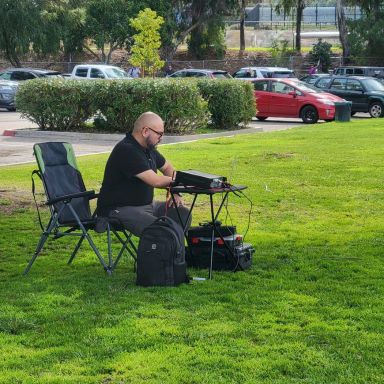
📰Amateur Radio Newsline Report 2480 for Friday, May 9th, 2025 [upl-file uuid=a4ef74d2-bcad-4cce-8732-2aa769b5f07e size=18MB]report2480.mp3[/upl-file] _source: https://www.arnewsline.org_ - FCC TO PUSH FOR US-BASED TESTIN…
Running some digital modes mobile from the truck today! Using my Yaesu FT-891 with Armoloq rails, and mounted on top is the Digirig DR891, solid little setup for portable digital ops. Works great for FT8, WinLink, JS8Cal…
Just launched the HamLike.com Event Calendar — a place where anyone can post ham radio-related events, including: ✅ Nets ✅ Club meetings ✅ Swaps ✅ Contests ✅ Special events ✅ Field Days ✅ Anything ham-related! If it’s ha…
# 📡 What to Post on HamLike.com — and How! Welcome to HamLike.com — the community-driven ham radio hub where you decide what makes the homepage. Every thumbs-up you give helps surface the best content for everyone to see…
Video: https://www.instagram.com/reel/DJcHi30OtTi/?igsh=ajNwa255dHgyY3hh
This link was shared to me by KO6CPN, thank you! ### Link: https://www.md0mdi.im/ddrr-an-antenna-for-small-spaces/ https://alphaxray.info/cb-antennas/2016/build-cb-11-metre-27mhz-ddrr-quarter-wave-vertical-performance-lo…
Hey everyone! I'm curious about how you're keeping track of your QSOs. There are so many options out there… from classic paper logs to modern apps and cloud-based tools. Some hams love N3FJP, Log4OM, HAMRS, or Ham Radio …
https://youtu.be/OnmNIXAi9ac?si=OadvR7Mk3Y5kH8DM
Hey everyone, I’ve been working on some logo designs for HamLike.com and ended up with 5 different versions. I’m not totally sold on any one of them yet, so I figured I’d ask for your input. Take a look at the logos belo…
I think that you are making headway in trying to bring the San Diego Amateur Radio Operators together. Keep it up.
Hey everyone, exciting news! SDHam.org has officially rebranded to HamLike.com, and rolled out some awesome new features! The biggest addition? Thumbs-up voting is now live! If you see a post you like, whether it’s helpf…
I'm reaching out to see if anyone in the community might be able to help me out. After installing a solar system at my house, I started experiencing major RFI issues across the HF bands. It's bad enough that I can barely…
Did a quick test of the GRA-7350T on 20 meters. Setup was straightforward, and an antenna analyzer was definitely useful for quicker tuning. So far, getting good performance. Curious if anyone else is running this and wh…
# **arcOS: A Simple Way to Get on Digital Ham Radio** If you’ve ever wanted to try digital ham radio but found the setup confusing, **arcOS** might be exactly what you need. Special thanks to KG4VDK for creating this val…
Running a Meshtastic device? Let’s see what you’ve got! Whether it’s a simple handheld, a mobile rig in your truck, or some DIY setup with wires everywhere, we want to check it out. Meshtastic is growing fast, and San Di…
If you’ve been in the hobby for a while and feel like you’ve hit a rut, **you’re not alone**. Maybe you’ve worked all the DX you care about, or you’re tired of the same local repeater chatter. But instead of walking away…
DigiPi is a powerful and compact amateur radio data transceiver designed for Raspberry Pi, offering seamless access to various digital modes over Wi-Fi via a phone or web browser. This innovative device transforms tradit…